Super Preservation Age: What Australians Approaching 60 Need to Know

Most Australians can start pulling money from their super once they hit their preservation age (60 for anyone born after June 30, 1964) and satisfy a condition of release, such as retiring or leaving a job after that birthday. Turn 65, and access is unrestricted no matter what your employment status looks like. For anything beyond the basics, the Australian Taxation Office and Services Australia are the two sources worth bookmarking.
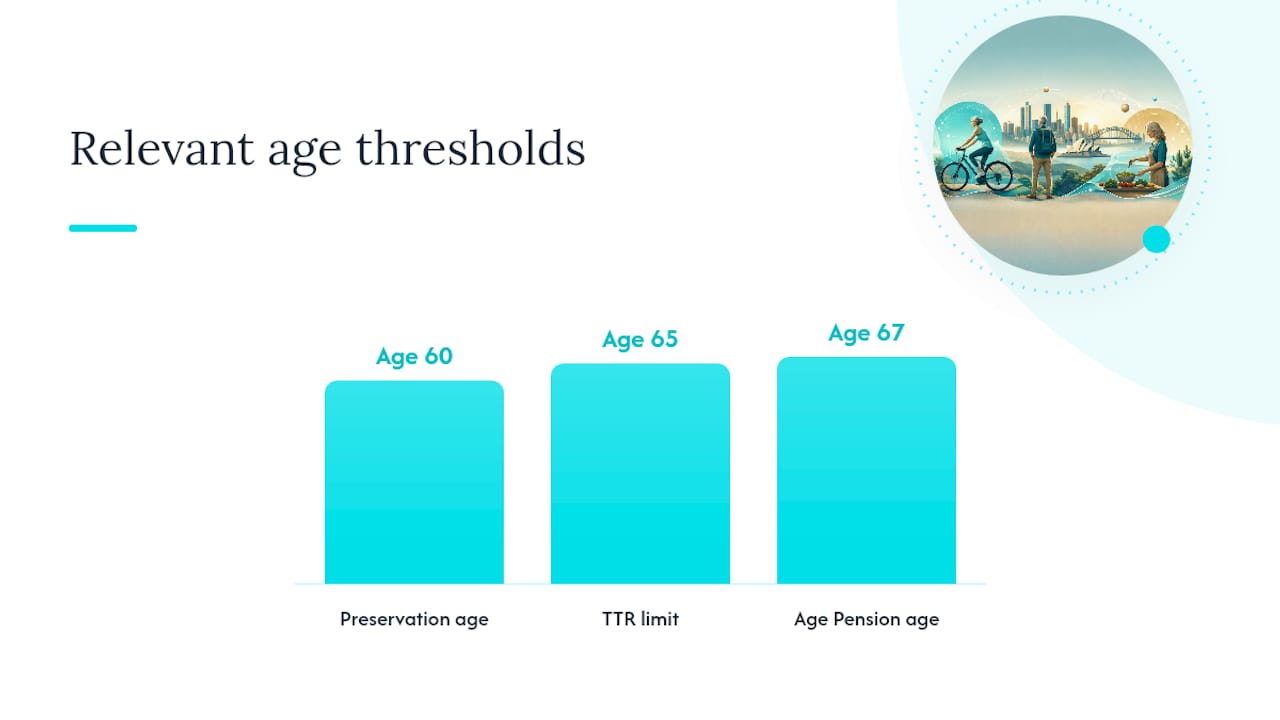
- Preservation age is not the same thing as Age Pension age (67).
- Reaching preservation age doesn’t hand you your super automatically. You still need a qualifying condition.
- At 65, every restriction lifts regardless of your work situation.
Key Takeaways
Accessing your super requires reaching your preservation age (60 for anyone born after June 30, 1964) and satisfying a specific condition of release, not just hitting a birthday.
| Point | Details |
|---|---|
| Preservation age is 60 | Applies to everyone born after June 30, 1964, replacing the old sliding scale. |
| Age alone isn’t enough | You need a condition of release, such as retiring or ceasing employment after 60. |
| TTR bridges the gap | Lets you draw income from super while still working, from preservation age until 65. |
| Tax and pension are separate | Withdrawals after 60 are often tax free, but Age Pension eligibility starts at 67 with its own tests. |
| Model before you withdraw | Tools like Aerowealth let you compare lump sum, phased, and TTR strategies before you commit. |
This article is general information, not a substitute for advice from a qualified financial advisor. Consult a qualified financial professional about your own circumstances before acting on anything here.
Table of Contents
- Which Super Preservation Age Applies to Your Birthdate
- Conditions of Release: The Legal Triggers for Accessing Super
- Transition to Retirement: Drawing Super While Still Working
- Tax Rules and Age Pension Eligibility After Preservation Age
- How to Actually Access Your Super Once You Qualify
- Why You Might Not Want to Cash Out the Moment You’re Eligible
- Modelling Your Withdrawal Strategy Before You Commit
- Sources
- FAQ
Which Super Preservation Age Applies to Your Birthdate
Preservation age used to slide up gradually depending on when you were born, but that phase in is finished. Anyone born after June 30, 1964, has a preservation age of 60, full stop. If you were born earlier, the older sliding scale still applies to you.
Quick fact: Anyone under roughly 62 today was born after the cutoff, meaning the flat age of 60 already covers the overwhelming majority of people reading this. AMP’s guide to preservation age confirms 60 is now the standard for everyone moving toward retirement.
The bands existed because the government phased the reform in over roughly a decade rather than changing the rule overnight for people already close to retiring. That transition is long over now. Still, don’t take this table as gospel forever. Rules get tweaked, so cross check your own date of birth against the ATO’s official preservation age guidance and confirm your specific super fund hasn’t layered on its own administrative requirements.
Conditions of Release: The Legal Triggers for Accessing Super
Preservation age alone doesn’t unlock anything. Your super stays preserved until you meet one of the recognized conditions of release, a legal list the ATO maintains:
- You’ve reached preservation age and genuinely retired, meaning you don’t intend to work 10 or more hours a week again.
- You’ve reached preservation age and started a transition-to-retirement income stream.
- You’ve ceased an employment arrangement on or after turning 60, even if you plan to keep working elsewhere.
- You’ve turned 65, regardless of employment status.
- You’ve died, permanently triggering a payout to your estate or beneficiaries.
- You’ve become permanently incapacitated.
Beyond these, narrower exceptions exist, including severe financial hardship, a terminal medical condition, and the First Home Super Saver Scheme, each with its own paperwork and eligibility rules the ATO spells out separately.
Here’s where people trip up: someone who stops working entirely at 59 hasn’t met a condition of release yet, because they haven’t reached preservation age. Someone who resigns from one job at 61, even if they start a new job the following week, has satisfied the “ceased an employment arrangement after 60” condition and can access their super regardless of the new job.

Pro Tip: If you’re 60 or older and thinking about switching employers, that job change itself can be a condition of release. It’s worth checking with your fund before you resign, since the timing can open up options you didn’t know you had.
Transition to Retirement: Drawing Super While Still Working
A transition-to-retirement (TTR) income stream lets you access part of your super once you’ve reached preservation age, even if you’re still working full time. It’s not a lump sum. It pays you regular income, similar to a pension, while the rest of your balance stays invested.
TTR suits people who want to cut back hours without taking a full pay cut. Say you’re 60 and want to drop from five days a week to three. A TTR pension can top up the missing income while your super continues earning returns. Moneysmart notes that TTR is specifically designed for this partial access window between preservation age and 65.
- Available strictly from your preservation age, not before.
- Pays income, not an open lump-sum withdrawal.
- Comes with its own tax treatment and annual payment limits set by your fund.
- Ends automatically at 65, when full unrestricted access applies anyway.
Tax Rules and Age Pension Eligibility After Preservation Age
Reaching preservation age changes what you can withdraw. It doesn’t automatically change your tax bill or your Age Pension eligibility, and mixing those two up is one of the more expensive mistakes people make.
On the tax side, most withdrawals made once you’re 60 or older are tax free, according to Moneysmart. That said, tax treatment still depends on the components inside your balance, since some funds hold taxable elements tied to specific contribution histories, and the ATO’s guidance on tax on super benefits breaks this down by component.
Age Pension eligibility runs on a completely separate track. Services Australia sets Age Pension age at 67, and qualifying depends on passing income and assets tests, not on your super’s preservation status.
- A tax-free super withdrawal at 61 has zero bearing on your Age Pension eligibility at 61, because you’re not eligible for the pension yet regardless.
- Withdrawing a large lump sum in your 60s and spending it down can shift your asset position by the time you reach 67, changing your pension outcome either way.
- Keeping funds inside super versus moving them to a personal bank account can affect how Services Australia assesses your assets, which is exactly why modelling the interaction between super and the Age Pension matters before you make a big withdrawal.
How to Actually Access Your Super Once You Qualify
Meeting a condition of release doesn’t mean the money lands in your account the next day. Funds have their own verification process, and skipping a step just slows things down.
- Confirm which condition of release applies to you and gather the evidence your fund needs to verify it.
- Check your specific fund’s rules, since processing times and required forms vary between providers like Australian Retirement Trust and AMP.
- Submit identification and supporting documents.
- Contact your fund directly to lodge the withdrawal or income stream request.
- Choose your payment structure: full lump sum, partial withdrawal, or an ongoing income stream.
Funds commonly ask for a birth certificate or driver’s license, a letter confirming separation from an employer, and sometimes a statutory declaration confirming your retirement intentions.
- Employment cessation after 60 typically needs employer confirmation of the end date.
- Full retirement before 60 requires a stronger declaration, since you’re asserting you don’t intend to work 10+ hours a week again.
Pro Tip: If you’re leaving one job after 60 but plan to keep working elsewhere, tell your fund exactly that. It changes which condition of release you’re claiming, and getting it wrong can delay your payment.
Why You Might Not Want to Cash Out the Moment You’re Eligible
Being allowed to withdraw and being smart to withdraw are two different questions. Super earnings inside the fund are taxed concessionally, which is a genuine incentive to leave money invested rather than parking it in a low-interest savings account the day you turn 60.
There’s also longevity risk. Retirement can stretch 25 to 30 years, and a lump sum spent too early leaves nothing for the back half of that stretch. Moneysmart points out that you’re never required to cash out at retirement. Plenty of people treat super as a managed resource rather than a single payday.
Before deciding, run the numbers on: tax owed on different withdrawal structures, how a lump sum affects your future Age Pension test, what happens if investment returns hit a rough patch right when you retire (sequence-of-returns risk), and whether your planned spending actually matches guaranteed income sources.
Pro Tip: A licensed financial adviser or a retirement scenario modelling tool can test these trade-offs before you commit to anything irreversible.
Modelling Your Withdrawal Strategy Before You Commit
You don’t need a finance degree to stress test a withdrawal plan, but you do need the right inputs: current super balance, other assets, target retirement age, expected spending, likely investment returns, tax assumptions, and your Age Pension eligibility timeline.
- Build a baseline projection using your current balance and expected growth.
- Compare alternatives side by side: a full lump sum, a phased drawdown, or a TTR income stream.
- Stress test each scenario against lower investment returns and higher inflation.
Moneysmart’s super and pension age calculator is a solid starting point for a rough estimate. For a deeper side-by-side comparison across multiple withdrawal strategies, a dedicated modelling tool saves you from rebuilding spreadsheets every time one assumption changes.
A planner’s take on timing
Reaching preservation age isn’t a finish line, it’s a decision point. Test a handful of withdrawal sequences before you lock anything in. A six month difference in when you stop working, or whether you choose TTR over a lump sum, can shift your lifetime outcome more than people expect.
See Your Options Before You Withdraw a Dollar
Most people only find out how a withdrawal decision affects their Age Pension years after they’ve already made it. Aerowealth lets you compare a lump sum, a phased drawdown, and a TTR income stream side by side, with the tax and pension implications built into each projection instead of buried in a spreadsheet you have to build yourself.

The platform models your super balance alongside property, mortgages, and other investments, so you can see how a withdrawal decision today plays out over a 20 or 30 year retirement, not just next year. If you’re within a few years of preservation age and want to test your options before contacting your fund, try Aerowealth’s retirement modelling tool or check the Pro plan details for full scenario comparisons.
Sources
- Conditions of release | Australian Taxation Office
- Moneysmart
- Who can get Age Pension | Services Australia
FAQ
What Will the Super Preservation Age Be in 2026?
It stays at 60 for everyone born after June 30, 1964, which covers nearly every worker approaching retirement in 2026. There’s no scheduled increase beyond this age.
Can I Withdraw All My Super at Preservation Age?
Only if you also meet a condition of release, such as genuine retirement, since reaching preservation age by itself doesn’t unlock your balance. Once you turn 65, access becomes unrestricted regardless of employment status.
Can I Retire at 62 and Access My Super?
Yes. If you’ve reached your preservation age (60) and genuinely retire at 62, you satisfy the retirement condition of release and can access your super.
Can You Contribute to Super After Age 70?
Yes, though contribution rules and caps can depend on your work status and age, so check the current caps with your fund or the ATO before contributing.