When the First 2 Hectares of Your Family Home Count for Age Pension in Australia

Your family home is generally exempt from the Age Pension assets test as long as you live in it. The main exceptions kick in when you move into aged care long term, rent the place out, sell it, or set up a granny-flat arrangement. Those situations can shift some or all of the home’s value into the assessable column, so check Services Australia’s assets test rules before making a big decision about it.
TL;DR:
- Moving into aged care or selling the home generally ends the exemption, making its value assessable unless a temporary exemption applies.
- Surplus land beyond two hectares, or land on a larger rural property, can carry additional exemptions beyond the initial land area.
- Renting out the home or creating a granny-flat interest on your property can trigger assessment of the property’s value, depending on legal interest details.
- Asset thresholds differ for homeowners and non-homeowners, with thresholds reviewed periodically in March, July, and September, affecting pension eligibility.
- Running scenario comparisons through modeling tools before making sale or rental decisions can prevent costly pension outcome surprises.
Table of Contents
- How the Family Home Is Treated Under the Assets Test
- Common Situations That Can Change the Home’s Exemption Status
- Assets Test Thresholds and What They Mean for Your Pension
- If Your Home Becomes Assessable: What to Do Next
- What Aerowealth Sees Retirees Get Wrong About Timing
- See What Selling or Renting Your Home Would Actually Do to Your Pension
- Where to Check the Official Rules
- Sources
- FAQ
How the Family Home Is Treated Under the Assets Test
Centrelink calls it your “principal place of residence,” and the definition is more literal than people expect. It’s the address you actually live at, where your belongings sit, and where you’d reasonably say home is. If you’re renovating and staying elsewhere temporarily, or in hospital for a stretch, that usually doesn’t change your principal home status.
The exemption isn’t limited to four walls. Services Australia treats up to the first 2 hectares of land attached to the home as exempt too, regardless of what the total block is worth. That matters if you’re on a larger suburban block or a rural property with a house on it, because land beyond that 2 hectare mark can be assessed separately, sometimes with extra exemptions for farms still being actively worked.
Granny-flat arrangements sit in a different category entirely. If you’ve paid a lump sum to live in a granny flat on a family member’s property, or set one up on your own land, Centrelink assesses it as a “granny-flat interest” rather than as standard real estate. The rules hinge on whether you have a legal or equitable interest in the property, not just an informal handshake deal.
A few points worth locking in:
- The home itself is not counted while you live there, no matter its market value.
- The first 2 hectares of surrounding land is generally exempt too.
- Granny-flat interests follow separate valuation rules, not standard property assessment.
- Farms and larger rural blocks can carry additional exemptions beyond the 2 hectare line.
Quick fact: Services Australia and the Department of Veterans’ Affairs both confirm that once you stop living in a property as your main residence, permanently, that exemption generally stops applying too, opening the door to full or partial assessment.
DVA runs a near-identical framework for veterans, with its own guidance on how home ownership affects pensions and payments, including worked figures specific to veteran pension rates.
Common Situations That Can Change the Home’s Exemption Status
The exemption isn’t permanent by default. It’s tied to you actually living there, and several everyday life events can end it.
- Moving into residential aged care. You typically keep a temporary exemption for a limited time after entering care, but that clock starts ticking the day you move in, not when you decide to sell.
- Renting the home out. Once you stop living there and start collecting rent, the property generally loses its principal-home status and becomes assessable, sometimes along with the rental income itself under separate rules.
- Selling the home. Sale proceeds usually become assessable, though a limited temporary exemption can apply while you’re using the money to buy or build a new home.
- Leaving it vacant. A holiday home you never live in, or a home left empty after you move elsewhere permanently, doesn’t carry the same exemption as your actual residence.
- Subdividing or creating granny-flat arrangements. Selling off part of the block, or restructuring who legally lives where, can trigger a fresh assessment of what counts as exempt.
A spouse, dependent child, or what Centrelink calls a “protected person” still living in the home can preserve some exemption even after you’ve moved out, particularly in aged-care scenarios. That detail trips up a lot of couples who assume the exemption dies the moment one partner enters care.
Pro Tip: Before you sign anything, ring Services Australia or a financial counselor to confirm which exemption clock applies to your exact situation. The 24 month aged-care exemption and the sale-proceeds exemption run on different rules, and mixing them up is one of the more common (and costly) mistakes retirees make.
Assets Test Thresholds and What They Mean for Your Pension
Services Australia sets separate asset limits for homeowners and non-homeowners, which is the whole reason the home exemption matters financially. A homeowner’s asset limit for a full pension is lower than a non-homeowner’s, because the family home itself isn’t counted for the homeowner, while a non-homeowner’s rent or living costs get partly offset by a higher threshold instead.
Once your assessable assets exceed the lower threshold, your pension reduces by a set amount for every $1,000 over the limit, until it phases out entirely at the upper cut-off point. Services Australia reviews these figures in March, July, and September each year, so the exact dollar figures shift periodically. It’s worth checking current thresholds directly on the assets test page rather than relying on a number that might be a year old by the time you read it.
| Scenario | Assessable assets (excluding home) | Likely outcome |
|---|---|---|
| Single homeowner, modest savings and car | Below the homeowner full-pension limit | Full pension, home fully exempt |
| Homeowner couple with investment property | Above the homeowner threshold, below cut-off | Part pension, reduced per $1,000 over limit |
| Single non-homeowner renting privately | Same dollar value as the homeowner example above | Higher threshold applies, may still get full pension |
The pattern to notice: identical savings and investments produce different outcomes purely because one person owns a home and the other doesn’t. That’s the entire logic behind the two-tier threshold system, and it’s why a retiree selling their home needs to recalculate everything, not just add the sale price to their existing assets.
A detailed breakdown of the current homeowner and non-homeowner thresholds can help you map your own numbers against the latest figures before you make a decision either way.
If Your Home Becomes Assessable: What to Do Next
Notify Services Australia as soon as your circumstances change, whether that’s entering care, signing a lease on your old place, or settling a sale. You’ll typically need proof of the transaction date, sale contract or lease agreement, and updated bank statements showing where the proceeds landed.
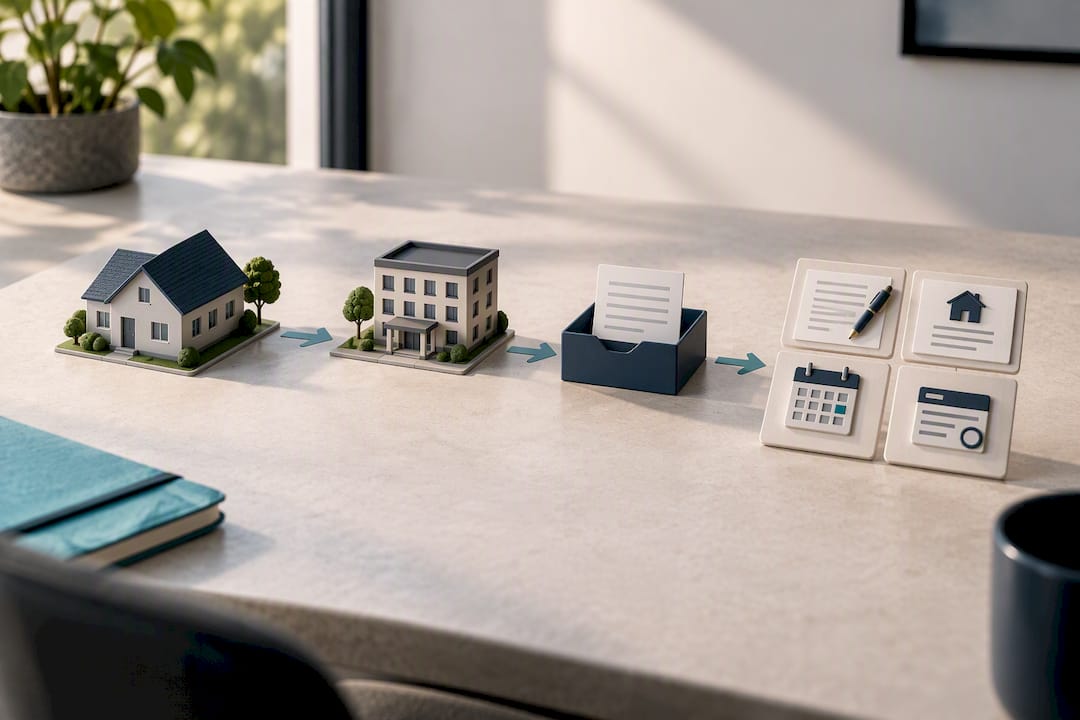
Temporary exemptions exist for a reason, but they’re time limited. The aged-care exemption and the sale-proceeds exemption both run on fixed windows, and missing the deadline can mean a sudden pension recalculation you didn’t see coming.
A few planning options worth exploring before you act:
- Downsizing to a smaller property can free up cash while potentially keeping you under the relevant threshold, especially when timed against pension reviews.
- The Home Equity Access Scheme lets eligible retirees draw on home equity without selling outright, which can bridge a income gap without triggering full assessability.
- Timing your sale around the March, July, or September threshold reviews can meaningfully change your outcome.
- Structuring spend-downs on major purchases (car, home repairs, holidays) can lower assessable assets legitimately if done before a review date.
Pro Tip: Run the numbers before you commit to selling or renting. A free scenario comparison tool can show you the pension impact of each option side by side, which beats guessing based on a rough back-of-envelope calculation.
What Aerowealth Sees Retirees Get Wrong About Timing
Most retirees treat the home exemption as a fixed rule rather than a moving target tied to specific dates and decisions. In reality, selling a month earlier or later, or choosing to rent instead of sell, can shift a pension outcome by thousands of dollars a year. Model the scenario before you decide, not after.
— Aerowealth Team
See What Selling or Renting Your Home Would Actually Do to Your Pension
Aerowealth is built for exactly this kind of decision: modelling how a sale, a move into aged care, or a rental arrangement changes your Age Pension outcome before you commit to anything irreversible. Instead of guessing how the homeowner versus non-homeowner thresholds apply to your specific numbers, you can run side-by-side scenarios and see the projected pension, income, and net worth impact of each path.

That matters most when timing is the whole game, comparing selling now against selling after a threshold review, or renting out the family home against putting it on the market outright. Aerowealth’s free plan lets you build your first scenario without cost, and the Pro plan at $7 AUD per month unlocks deeper stress testing and comparison tools if you want to model multiple paths at once, including how a rental strategy stacks up against selling. Start with the free plan on the pricing page and map your own numbers before you make the call.
Where to Check the Official Rules
For the most current figures and rules, go straight to the source: Services Australia’s assets test page for thresholds, its asset types page for real estate specifics, My Aged Care for aged-care means testing, DVA for veterans’ rules, and Legal Aid NSW for plain-language legal interpretation.
This article is general information, not a substitute for advice from a qualified financial advisor. Consult a qualified financial professional about your own circumstances before acting on anything here.
Sources
- Assets test for Age Pension — Services Australia
- Means assessments for residential aged care — My Aged Care
- How owning a home can affect pensions and payments — DVA
- Your home and the Age Pension — Legal Aid NSW
FAQ
How Much Can I Have in Assets and Still Get the Pension?
The limit depends on whether you’re a homeowner or non-homeowner, and whether you’re single or partnered, with Services Australia publishing current cut-offs and reviewing them in March, July, and September. Homeowners face a lower threshold because their home isn’t counted, while non-homeowners get a higher limit to offset rent or housing costs.
How Does Centrelink Check Your Assets?
Centrelink assesses bank accounts, investments, superannuation (once you’re over pension age), vehicles, and real estate other than your principal home, based on information you report and periodic reviews. You’re required to notify Services Australia of changes like a property sale or a move into care, and failing to report can affect your payment accuracy.
Can My Daughter Continue to Live in My House if I Go Into Care?
Yes, in many cases a family member classified as a “protected person” living in the home can help preserve part of the exemption even after you move into residential care. My Aged Care’s means assessment rules explain how this interacts with aged-care fees, which run on a separate system from the Age Pension assets test, so both need checking.
How Many Assets Can You Have and Still Get Centrelink Payments?
It depends on the specific payment and your homeowner status, since the Age Pension assets test uses different thresholds than other Centrelink payments. For the Age Pension specifically, Services Australia’s current homeowner and non-homeowner limits determine whether you get a full pension, a part pension, or none at all.
Does Renting Out Part of My Home Affect the Exemption?
Renting out a room while you still live there generally doesn’t remove your principal-home exemption, but the rental income itself may count as assessable income. Renting out the entire property after you move out is different, since Services Australia treats that as ending your principal-residence status, making the property itself assessable too.